ServicesSedation Dentistry
Sedation Dentistry for Kids in Bridgewater
When fear, age or the amount of work makes a regular visit too hard, sedation can help your child stay calm while we treat their teeth. We explain why we suggest it, which level fits and what the other options are, before anything is booked.
When sedation makes sense for your child
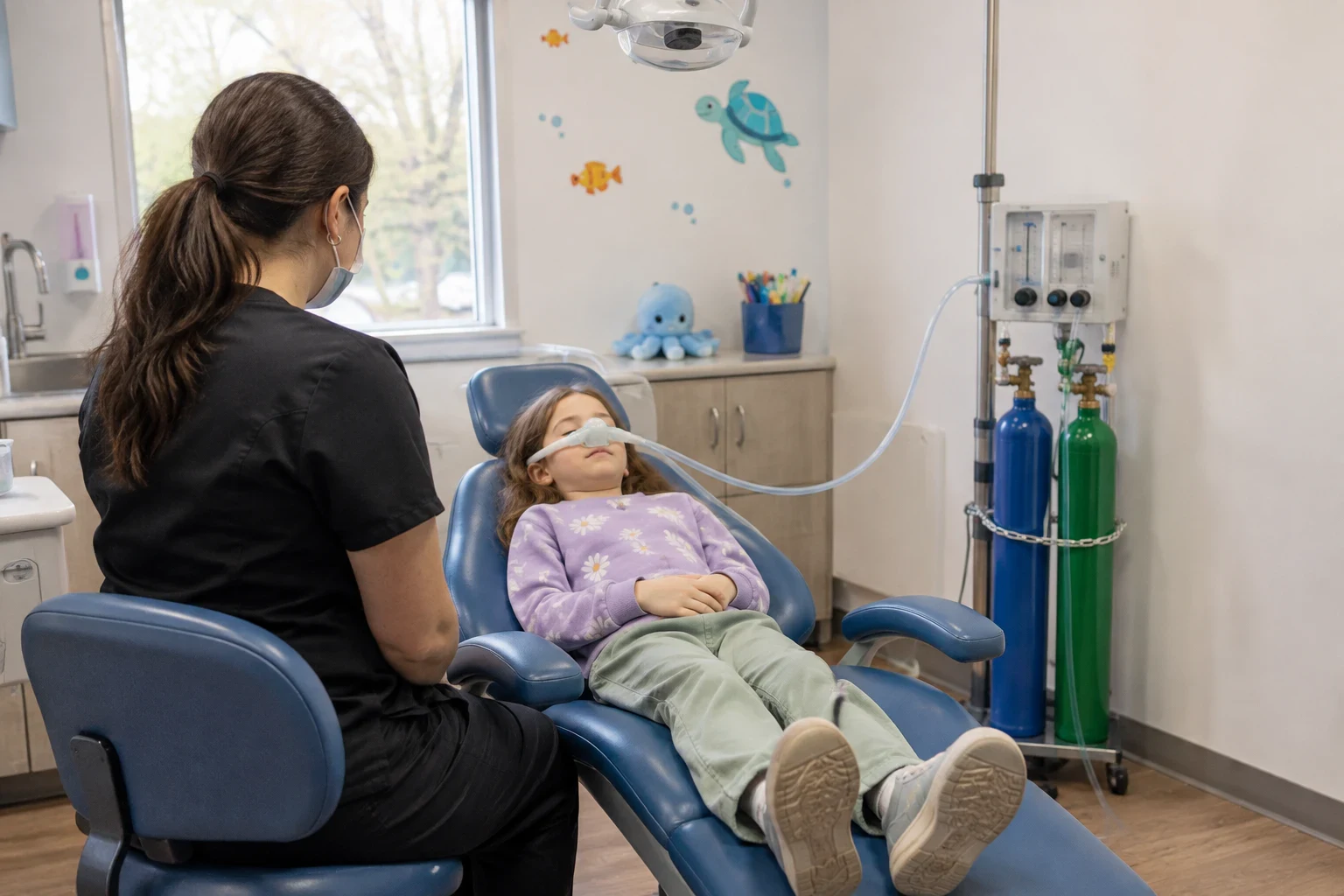
Sedation dentistry helps a child stay relaxed and still while we care for their teeth. We don't start with it. Plenty of kids get through treatment just fine with a gentle pace, simple explanations and a parent in the room. Sedation becomes the right call when fear, a very young age, a strong gag reflex or the amount of treatment needed would make a regular visit stressful or unsafe.
Our board-certified pediatric dentists look at your child's health history, the planned treatment and how past visits went before recommending anything. You will hear why we suggest it, what level we have in mind and what else could work, including spreading treatment over shorter visits without sedation.
Many families reach us after an earlier appointment ended in tears. The goal is simple: get the needed care done and help the next checkup feel a lot less scary.
What sedation care includes
- Checking your child's health first
- Before anything is planned, we ask about past illnesses, current medicines, allergies, snoring or trouble breathing, and whether your child has been sick lately. If a fever or a heavy cold shows up, we may need to move the date, and we will say so directly.
- A level matched to your child
- Nitrous oxide, the mild option many parents know as laughing gas, eases nerves while your child stays awake and can answer us. We only look at deeper sedation when a child truly needs it, and we explain how each choice works and why we are suggesting it.
- Written prep guidance
- Ahead of the appointment, we give you clear rules on food and drink, plus notes on clothing and who should come with your child. Following them closely is one of the biggest parts of keeping sedation safe.
- Close monitoring the whole time
- Once sedation begins and until the work is finished, we watch your child's breathing, oxygen level and heart rate.
- Time to recover with us
- Your child rests in our care until they are awake enough to leave. Before you go, we tell you what the rest of the day will likely look like.
- Fewer appointments overall
- If your child needs several fillings or pediatric crowns, sedation can let us complete more in a single visit. Fewer trips usually means less time for worry to grow.
Signs sedation may help your child
Fear stops the appointment
If past visits ended before any work got done, a calmer approach can let us actually treat the problem instead of putting it off.
A lot of work at once
Several cavities, an infected baby tooth that needs a root canal, or an extraction plus fillings can mean a long time in the chair. Sedation makes that easier on a child.
Very young age
Toddlers with early cavities cannot be expected to sit still for long treatment, and holding still matters for safe, careful work.
Sensory sensitivity or a strong gag reflex
Some kids find the sounds, tastes and touch of dental work overwhelming. Sedation can take the edge off so treatment is possible.
Special health or developmental needs
Certain conditions make it hard for a child to stay still or follow directions. We talk with you about what has worked before and plan around it.
What affects the cost of sedation
There is no single price for sedation, since it depends on your child and the work being done. We walk you through every line of the estimate before the appointment, so you know what the bill will look like. We accept MasterCard, Visa, Discover, most insurance plans and CareCredit Patient Payment Plan.
Which type of sedation
Nitrous oxide and deeper sedation call for different medications, equipment and monitoring. That difference shows up in the price.
How long the visit runs
More treatment means more time sedated and a longer stay in recovery before your child heads out.
The treatment itself
Sedation is just one item on the estimate. The fillings, crowns, extractions or other care done during that visit account for the rest.
What your plan covers
Insurance plans vary on whether they pay for sedation and whether they want approval ahead of time. We help you know which questions to ask your plan before the visit is booked.
How a sedation visit works
- 1
Consultation and plan
We examine your child, take X-rays if they are needed and go over the treatment plan and the sedation we recommend. Bring every question you have. There is no rush to decide.
- 2
Preparing the day before
Stick to the food and drink rules we gave you to the letter. Pick soft, roomy clothes for your child to wear, and pack a favorite stuffed animal or blanket if that brings comfort.
- 3
Treatment day
We check your child's health again, tell them what is coming in simple, kid-friendly words and start the sedation. When it has taken effect, we do the planned work while keeping a steady eye on how your child is responding.
- 4
Waking up and going home
Expect your child to be drowsy or a bit unsteady for a while. Plan a quiet afternoon, offer soft foods, keep an adult nearby and give us a call if anything worries you.
Sedation questions parents ask
Is sedation safe for kids?
When it is planned around a child's health history and closely monitored, sedation is a well-established part of pediatric dentistry. Safety starts before the visit, with the health review and the eating and drinking instructions. We will tell you if anything about your child's health means we should wait or choose a different approach.
Is laughing gas the same as being put to sleep?
No. Nitrous oxide helps a child feel relaxed and a bit floaty, but they stay awake and can respond to us. It wears off quickly once the mask comes off. Deeper sedation is a different level of care, and we explain the difference clearly if it comes up.
Will my child remember the visit?
It depends on the type of sedation. With laughing gas, many kids remember parts of the visit but recall it as calm. With deeper sedation, many children remember little or nothing of the treatment.
Are there options without sedation?
Often, yes. Shorter visits, a slower pace and a lot of explaining work for many kids. If your child can manage that way, we will say so. Sedation is an option, not a requirement.
What can my child eat after treatment?
Start with water or clear liquids, then soft foods like yogurt, applesauce or pasta once your child is fully awake. Skip anything hard or crunchy for the rest of the day, especially if numbing was used, so they do not bite their cheek or tongue.
Talk with us about your child's next visit
Tell us what past visits have been like and what treatment your child needs. We will explain the options and set up a consultation.