ServicesPediatric Crowns
Pediatric Crowns in Bridgewater
If decay has spread too far for a filling to hold, a small crown can keep your child's baby tooth working. Before we begin, we explain why it's needed, which crown suits the tooth and what it will cost. Most kids are finished in one gentle visit.
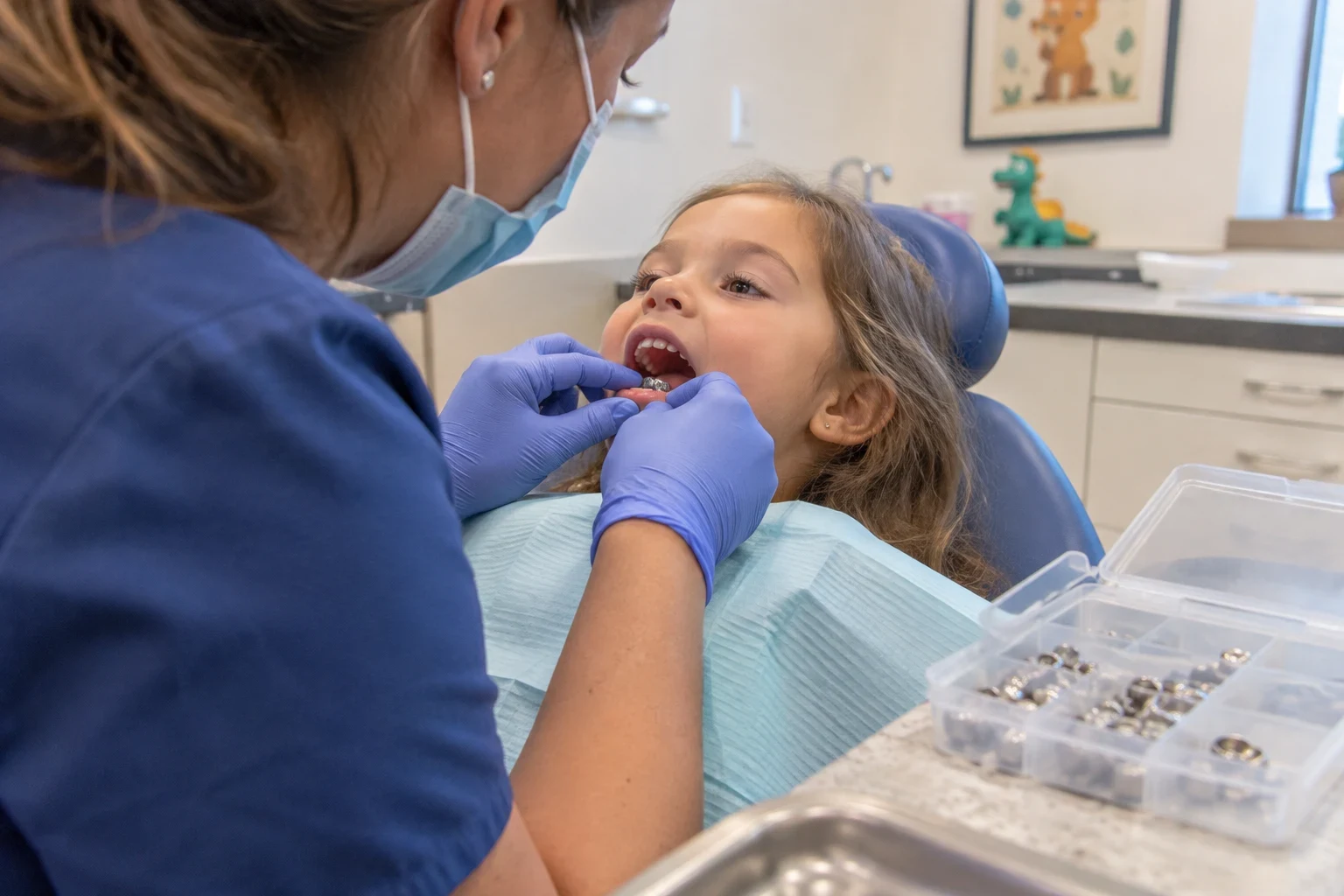
What a Pediatric Crown Is and When It Makes Sense
Think of it as a snug little cover that fits over a baby tooth from every side. Children's crowns come premade in small sizes, so nothing has to be sent to a lab and there is no second trip. We shape the tooth, pick the size that fits and place it the same day. It is a different thing from the custom crowns adults get.
A crown is usually our suggestion when decay has spread across several surfaces, when the tooth is cracked, or when pulp treatment has left it weak. A big filling in a tooth like that tends to break or leak, and your child ends up back in the chair. Since the crown protects the tooth all the way around, it typically stays in place until the baby tooth falls out on its own.
Many parents don't realize how long baby molars hang on. Some stay until age 10 to 12, holding space for the permanent teeth forming below. Keeping that molar healthy means your child can chew without discomfort and the adult teeth have a clear path into the right spot.
What Your Child's Crown Visit Includes
X-rays and an exam before anything else
We look at how far the decay has spread and whether it has reached the nerve. That answer decides whether a crown is enough on its own or the tooth needs pulp treatment first.
Steel or white, explained plainly
Stainless steel crowns are tough and the usual pick for back baby teeth. White zirconia crowns blend in with nearby teeth, so they're often chosen up front or when parents want a tooth-colored result. We'll tell you the real pros and cons for your child's specific tooth.
Keeping your child comfortable
With numbing medicine, your child notices some pushing but not pain. For nervous kids or visits involving several teeth, our Sedation Dentistry page describes the extra options we can discuss with you.
Nerve treatment in the same visit
When decay has reached the pulp, we take care of it right before the crown goes on, so there's no separate trip. Our Root Canals page covers how this works on baby and permanent teeth.
Aftercare that fits real life
We show you how to brush around the new crown and which foods are fine that day. After that, we keep an eye on it during routine Exams & Cleanings.
Signs Your Child May Need a Crown
- A large or dark spot on a back tooth
- Brown or black areas that cover much of a molar often mean decay has spread wider than a filling can fix.
- Pain when chewing or with cold drinks
- If your child avoids one side or winces at ice cream, the cavity may be deep. That is worth checking soon.
- A filling that keeps breaking
- A baby tooth that has needed repeat fillings may not have enough healthy structure left to hold another one.
- A chipped or broken tooth
- Falls and sports bumps can crack teeth. A crown can protect what is left so the tooth stays in place.
- Weak or chalky enamel
- Some kids are born with soft or poorly formed enamel that wears and decays quickly. Covering those teeth can prevent ongoing problems.
How the Appointment Goes
- 1
We talk with you first
We go over the x-rays, explain why the tooth needs a crown and which type we recommend. You get your questions answered before any treatment begins.
- 2
Numbing and getting comfortable
We use a gentle approach with simple words your child can follow. Once the tooth is numb, we place a small rubber cover to keep it dry and keep bits out of the mouth.
- 3
Removing decay and shaping
We clean out the decay, treat the pulp if needed, then shape the tooth so the crown fits snugly. For most children this part goes faster than parents expect.
- 4
Fitting and cementing
We try sizes until the fit is right, check the bite, and cement it in place. Your child goes home with the crown finished that day.
- 5
The rest of the day
The numbness wears off in a few hours, so soft foods and watching for cheek or lip biting help. Mild gum soreness for a day or two is normal.
What Affects the Cost of a Crown
Before any treatment starts, we tell you what the visit will cost, based on what your child's tooth actually needs. Three things move the total most: the crown material, how many teeth are involved and whether the tooth needs work before the crown goes on. Payment is simple. MasterCard, Visa and Discover all work, most insurance plans are accepted, and the CareCredit Patient Payment Plan is an option too.
- Steel or white crown
- Stainless steel crowns usually cost less than zirconia. Insurance plans often treat the two differently too, so we check what yours covers.
- Pulp treatment
- An infected nerve needs pulp treatment before the crown goes on. That extra step adds to the total for that tooth.
- Number of teeth
- Doing several teeth at once can change the plan, the chair time and the comfort options we recommend.
- Sedation
- Nitrous oxide or deeper sedation, when it fits the situation, is billed separately. We walk you through it so the choice is yours.
Parents' Questions About Pediatric Crowns
- Baby teeth fall out eventually, so why crown one?
- Back baby teeth can stay in the mouth until a child is around 10 to 12. If one is lost early, chewing gets harder and the teeth beside it can shift into the gap the adult tooth will need. When a tooth can't be saved and has to be removed, we may recommend a space maintainer to keep that room open.
- Who will be treating my child?
- Crowns are placed by our board-certified pediatric dentists. Their training centers on children's teeth and on keeping kids calm and comfortable in the chair.
- Will a silver crown be noticeable?
- On a back tooth, most people only see it when your child opens wide. If the tooth shows when your child smiles, or the look matters to you, ask us whether a white zirconia crown would work for that tooth.
- How long will the crown last?
- Most of the time it stays on until the baby tooth comes out by itself, and the crown leaves with it. Sticky candy and chewing on hard things can loosen one, so give us a call if it wiggles or falls off.
- Would a large filling work instead?
- For small and medium cavities, a filling is usually the right call, and our Fillings page explains that option. Once decay wraps around several sides of a baby molar, a crown generally holds up better and saves your child from repeat repairs.
Let's Take a Look at That Tooth
A phone call gets your child registered and on our schedule. Families from Bridgewater, Raynham and nearby towns visit us, and we'll explain your child's options plainly at the first visit.