ServicesFluoride Treatment
Fluoride Treatment in Bridgewater
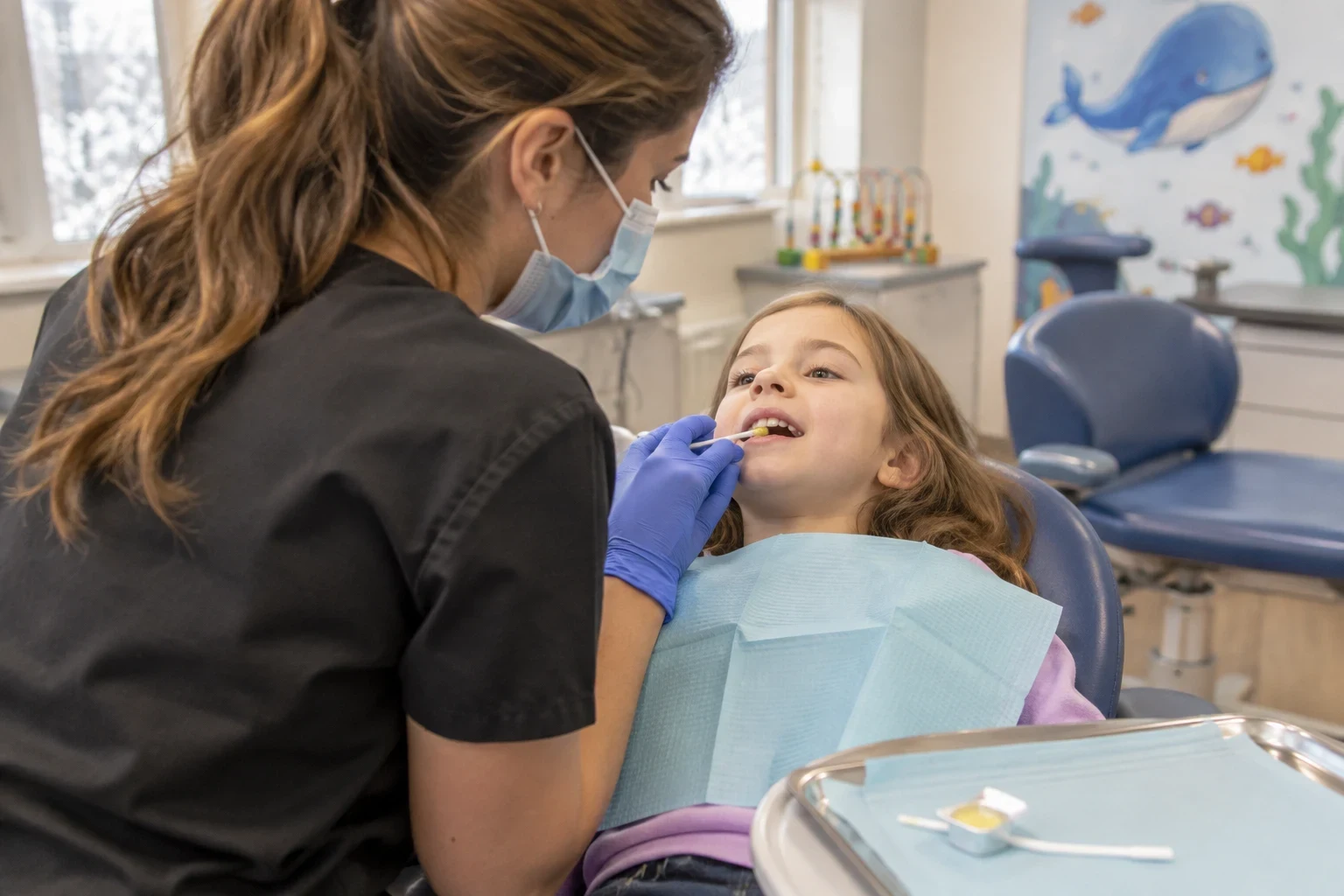
Fluoride varnish is one of the simplest ways to help your child's teeth fight off cavities. We paint a thin coat on after a cleaning, it takes about a minute, and there are no needles or drills. We'll tell you plainly how often your child actually needs it.
What Fluoride Does for Your Child's Teeth
Cavities start when bacteria feed on sugar and make acid. That acid pulls minerals out of enamel. Fluoride helps put minerals back and makes the enamel harder for acid to dissolve the next time. Baby teeth have thinner enamel than adult teeth, so they lose ground faster and benefit from the extra help.
The fluoride we use in the office is a varnish: a sticky, flavored coating brushed onto the teeth. It sets on contact with saliva and keeps releasing fluoride for several hours. It is a stronger dose than toothpaste gives, but the amount is small and measured for a child's size.
For most kids, fluoride varnish is part of a routine visit for exams and cleanings. Some children, especially those who have already had cavities, wear braces or have trouble brushing well, need it more often. Our board-certified pediatric dentists look at your child's own risk and explain the reasoning instead of applying the same plan to every child.
What a Fluoride Visit Includes
- A cavity risk check
- Before recommending anything, we look at your child's teeth, past cavities, diet habits and brushing routine. That tells us whether fluoride every six months is enough or whether more frequent visits make sense.
- A clean surface first
- Varnish works best on teeth free of plaque, so we apply it right after the cleaning. If your child came in for a quick check only, we brush the teeth before painting it on.
- Varnish in a flavor kids tolerate
- The varnish comes in mild flavors and goes on with a small brush. It dries fast, so there is no tray to hold in the mouth and nothing to gag on.
- Clear aftercare instructions
- We tell you exactly what your child can eat and drink afterward and when to brush again. You'll leave knowing what to do that evening.
- A straight answer on home fluoride
- We'll ask about your drinking water and the toothpaste you use. If your child needs more fluoride at home, or less, we'll say so and explain why.
Signs Your Child Could Use Extra Fluoride
Chalky white spots
Flat, matte white marks along the edge of the gums usually mean enamel has started losing minerals. Caught this early, the area can often be hardened again with fluoride before a true cavity forms.
Cavities in the past year
A child who has needed fillings recently is more likely to get new ones. Regular varnish lowers that risk.
Frequent snacks or sipping
Juice, milk at bedtime, or crackers through the day keep teeth bathed in sugar. More acid exposure means enamel needs more support.
Braces or crowded teeth
Brackets and tight spaces trap plaque that is hard to brush away. Fluoride helps protect the spots a toothbrush misses.
Well water or bottled water only
Private well water and most bottled water carry little or no fluoride. If that's what your child drinks most of the day, in-office varnish does more of the work.
What Affects the Cost of Fluoride Treatment
Fluoride varnish sits at the low end of what we do, and insurance often covers it when it comes with a routine checkup. Your share mostly depends on your plan and how many applications your child needs in a year. We go over both with you before we start, so the bill matches what you expected.
Your insurance plan
Many plans pay for children's fluoride a set number of times per year, and some stop covering it at a certain age. We can help you check what your child's plan includes.
How often it's applied
Twice a year is typical. A child with a higher cavity risk may need varnish more often, and applications beyond your plan's limit may be an out-of-pocket cost.
What else happens that visit
Varnish is usually added on to exams and cleanings. If we spot a cavity, fillings or sealants are separate line items, and we explain each one before doing anything.
How you choose to pay
We take MasterCard, Visa and Discover. We also work with most insurance plans, and the CareCredit Patient Payment Plan is available if paying over time suits your family better.
How Fluoride Treatment Works on the Day
- 1
Exam and cleaning
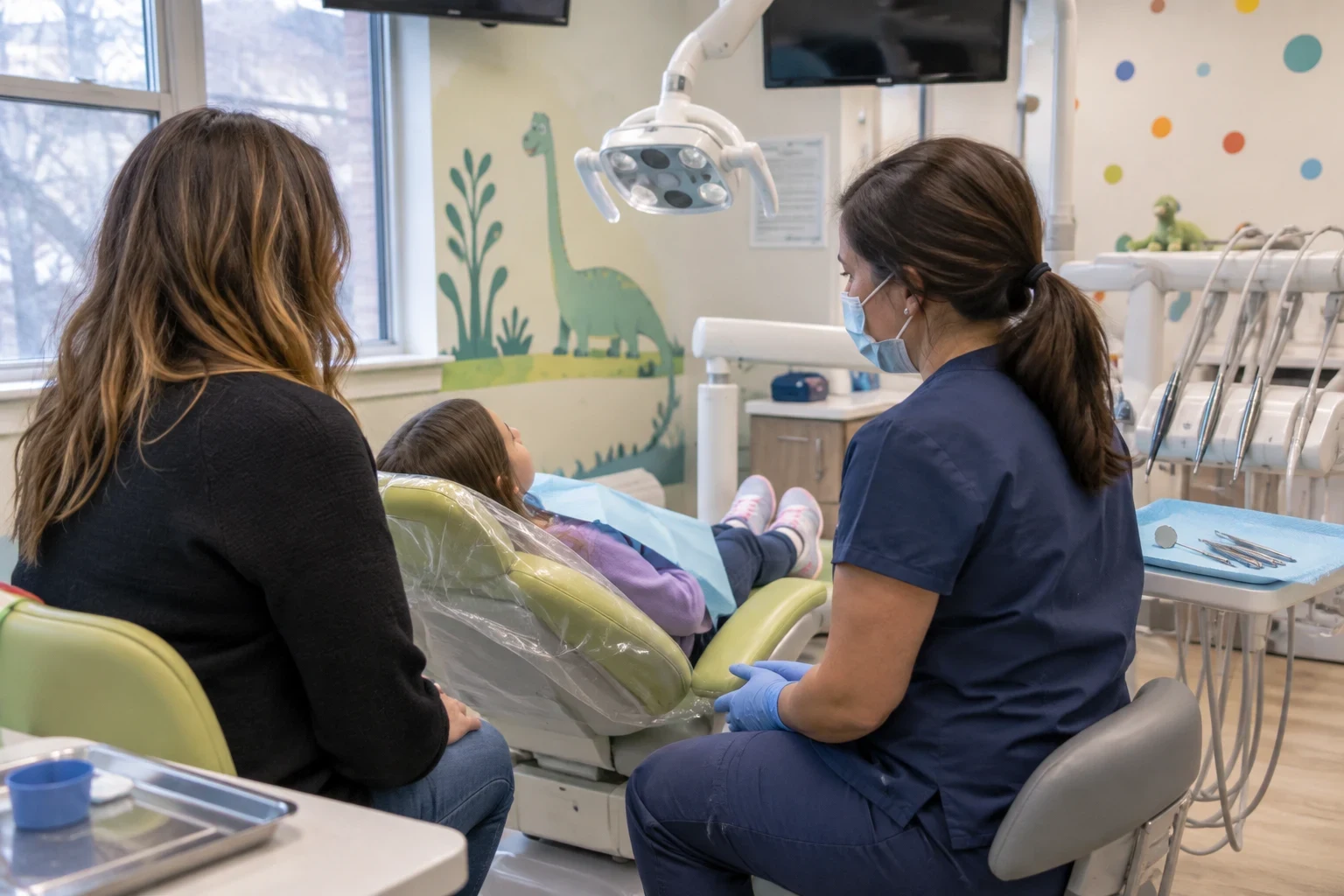
Your child sits in the chair, often with a parent close by. We check the teeth and clean away plaque so the varnish can reach the enamel.
- 2
Drying the teeth
We gently dry a few teeth at a time with cotton or a little air. Dry enamel lets the varnish stick properly.
- 3
Painting on the varnish
A small brush coats each tooth in a few strokes. The whole mouth usually takes about a minute, and younger kids can stay on a parent's lap if that keeps them calm.
- 4
Going home
Teeth may look slightly yellow or feel a bit fuzzy for a few hours. Soft foods and cool drinks are fine right away; we ask you to skip brushing until the next morning so the fluoride has time to work.
Fluoride Treatment Questions Parents Ask
Is fluoride varnish safe for young children?
Yes. One application holds a small amount measured for a child's size. Because varnish clings to the teeth rather than pooling in the mouth, very little gets swallowed. Major pediatric and dental groups recommend it from the first teeth on.
How young can my child get fluoride varnish?
Varnish can go on as soon as the first tooth breaks through. That's one reason we like a first visit around the first birthday. Babies usually handle it well since it only takes seconds.
Can my child eat after the treatment?
Yes, soft foods and cool drinks are fine right away. Skip hot drinks, sticky candy and hard, crunchy snacks for the rest of the day. Hold off on brushing until the next morning so the varnish has time to soak in.
Does fluoride replace sealants?
No, each one handles a different problem. Fluoride hardens enamel across every surface of the tooth. Sealants cover the deep pits and grooves on molars, where bristles slide right past food and plaque. Plenty of children do best with both, and we'll tell you plainly whether yours is one of them.
Will fluoride stain my child's teeth?
The varnish can leave a light yellow tint for a few hours, but it brushes off the next morning. It does not stain teeth. Lasting white spots from fluoride come from swallowing too much toothpaste over years, which is why we talk about how much paste to use at home.
What if my child won't sit still?
That's normal, and we plan for it. Toddlers can sit on a parent's lap, and the varnish goes on so quickly that most kids barely notice. We go at your child's pace.
Protect Your Child's Smile at the Next Checkup
Fluoride does the most good when it's part of every checkup, not a one-off. Ring us and we'll register your child and book an exam, cleaning and varnish in one visit. We see kids from Bridgewater, Raynham, Easton and the surrounding area.