Bridgewater, MA
Kids' Dentistry in Bridgewater, With Clear Answers for Parents
From a baby's first tooth to the teen years, we provide exams and cleanings, sealants, fluoride treatment, fillings, crowns and more. Your child gets a calm, unhurried visit, and you get a clear answer on what we found, what caused it and which options make sense. Many families join us from Raynham and East Bridgewater.
- Infants, kids and teens
- Board-certified pediatric dentists
- Choices explained up front
- Unhurried, gentle visits
What Shapes the Cost of Your Child's Dental Care
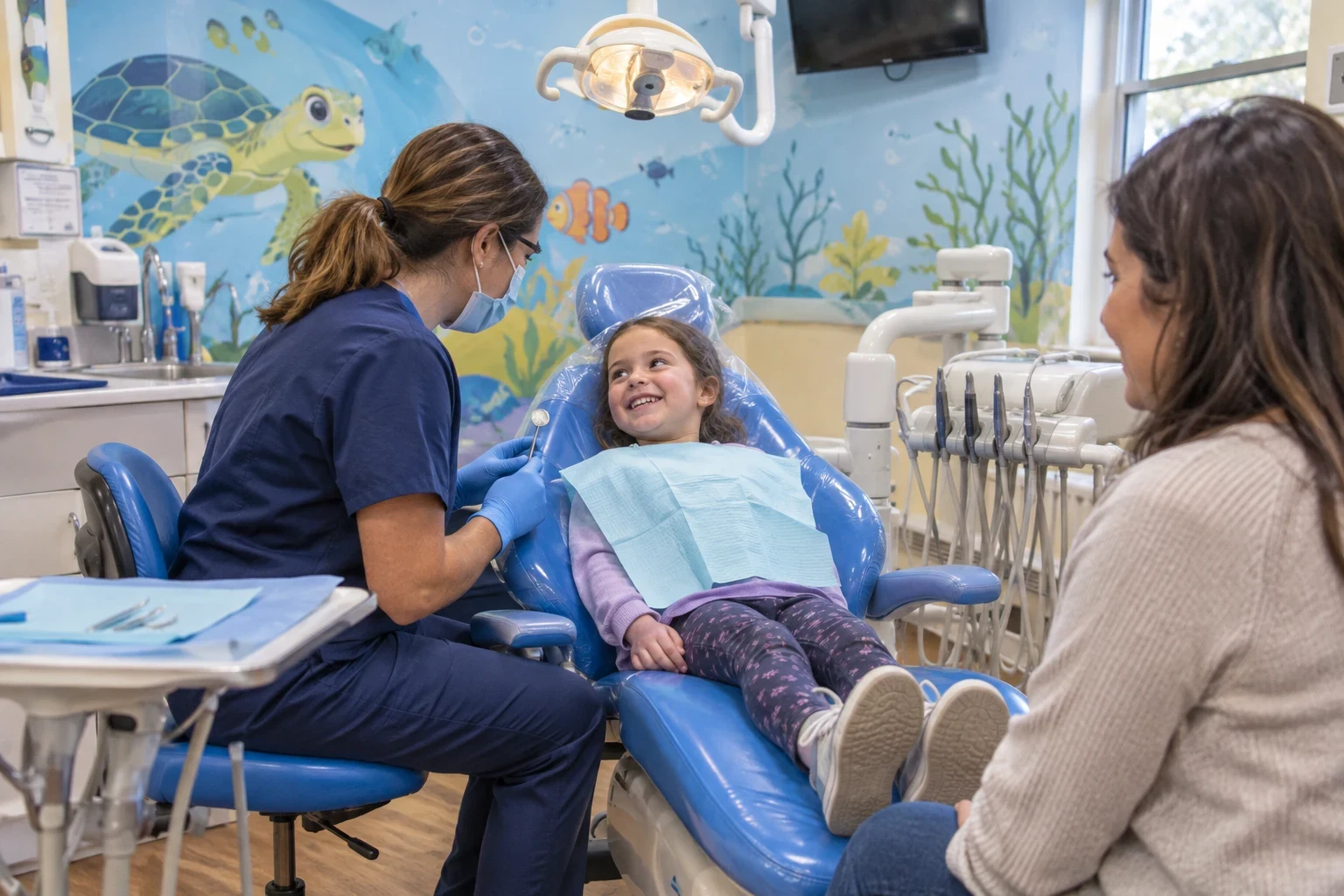
Nobody likes a bill they did not see coming, so we talk about cost before treatment, not after. What you pay mostly comes down to what your child's teeth need and how your insurance plan handles it. Anything beyond a routine checkup gets explained to you first, along with the reason for it.
You see the treatment plan and the expected costs before any work starts. Visa, MasterCard and Discover cards are welcome, along with most insurance plans and the CareCredit Patient Payment Plan.
- The kind of care
- A checkup and cleaning sits at one end of the range, and a crown or root canal sits at the other. Prevention like sealants and fluoride is usually far cheaper than fixing decay once it has set in.
- Number of teeth
- A single small cavity fits into one quick visit. Decay in several teeth can mean a longer appointment or splitting the work across two or more.
- Depth of the decay
- Caught early, a cavity usually needs only a simple filling. Once decay reaches the nerve, a baby tooth may need a root canal and a crown on top, and the cost rises with each step.
- Whether sedation is needed
- Plenty of kids are fine with numbing gel and a local anesthetic. When a child needs sedation to stay safe and calm, it is its own line in the plan, and we walk you through it ahead of time.
- How your plan covers it
- Insurance plans vary a lot, most of all on sedation, crowns and space maintainers. Most plans are accepted here, and we can go over what yours will probably pay for.
Dental Care Built for Growing Smiles
Most visits are about prevention: exams and cleanings, plus sealants and fluoride treatment that help healthy teeth stay that way. When a tooth needs more work, we provide fillings, pediatric crowns, root canals and extractions, along with space maintainers that save room for adult teeth. Frenectomies release a tight tongue-tie or lip-tie, and sedation dentistry is there for kids who find it hard to relax in the chair.
Exams & Cleanings
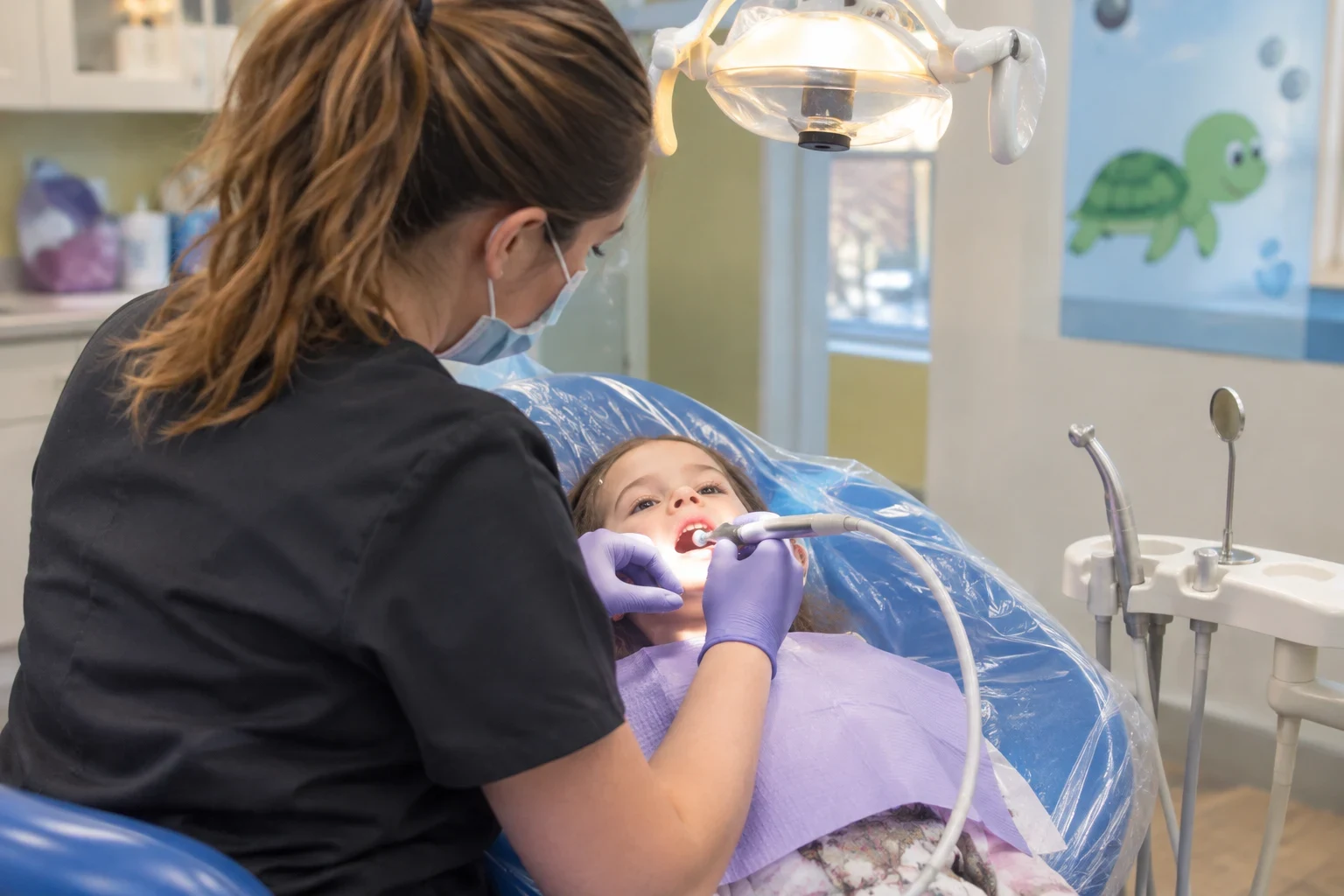
Regular checkups and gentle cleanings that catch small problems early and show you exactly where your child's teeth stand.
Sedation Dentistry
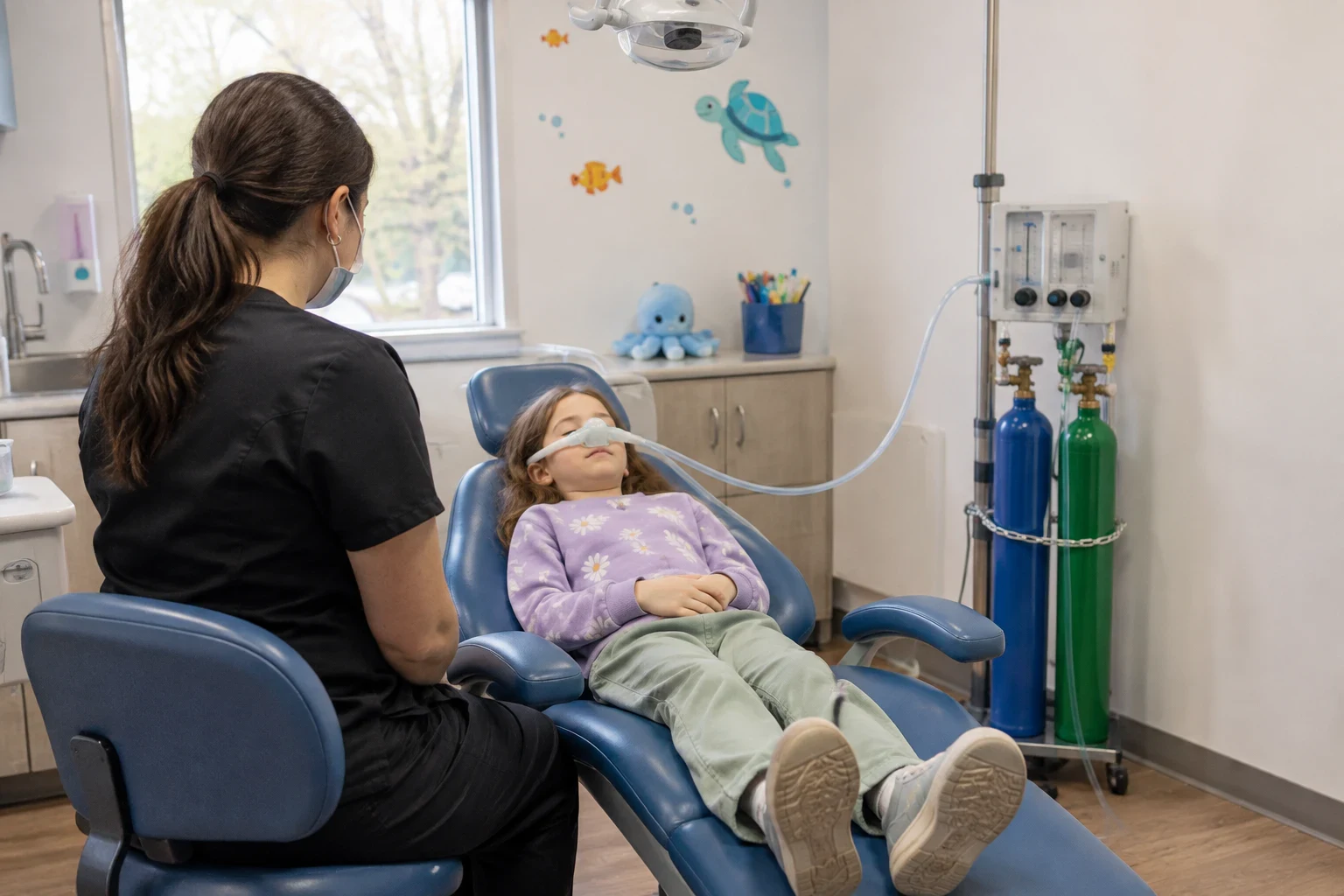
Carefully monitored sedation for kids who are anxious, very young or need several treatments done in one visit.
Fillings
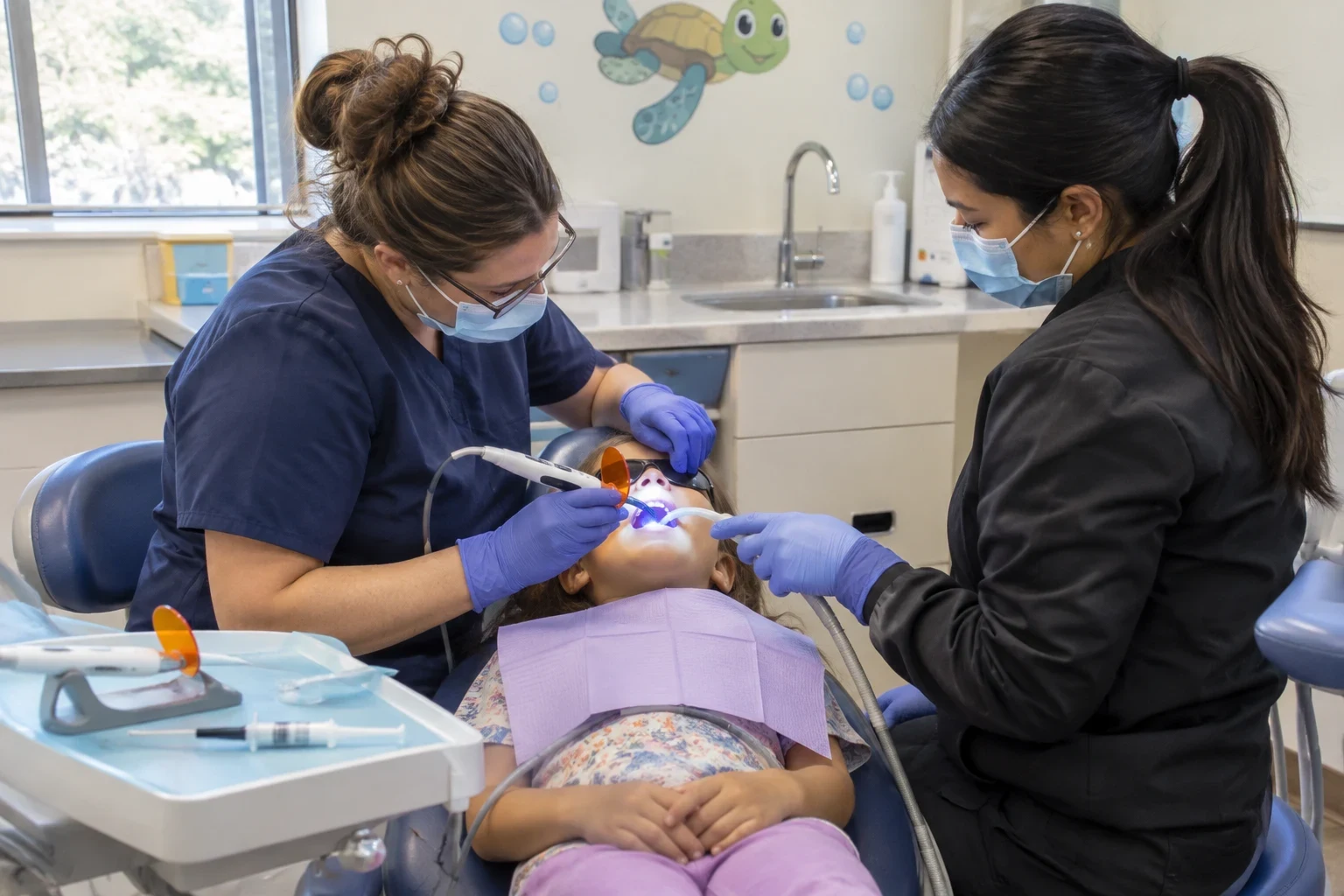
Small cavities fixed early with tooth-colored fillings, plus a plain explanation of why the cavity formed and how to keep the next one away.
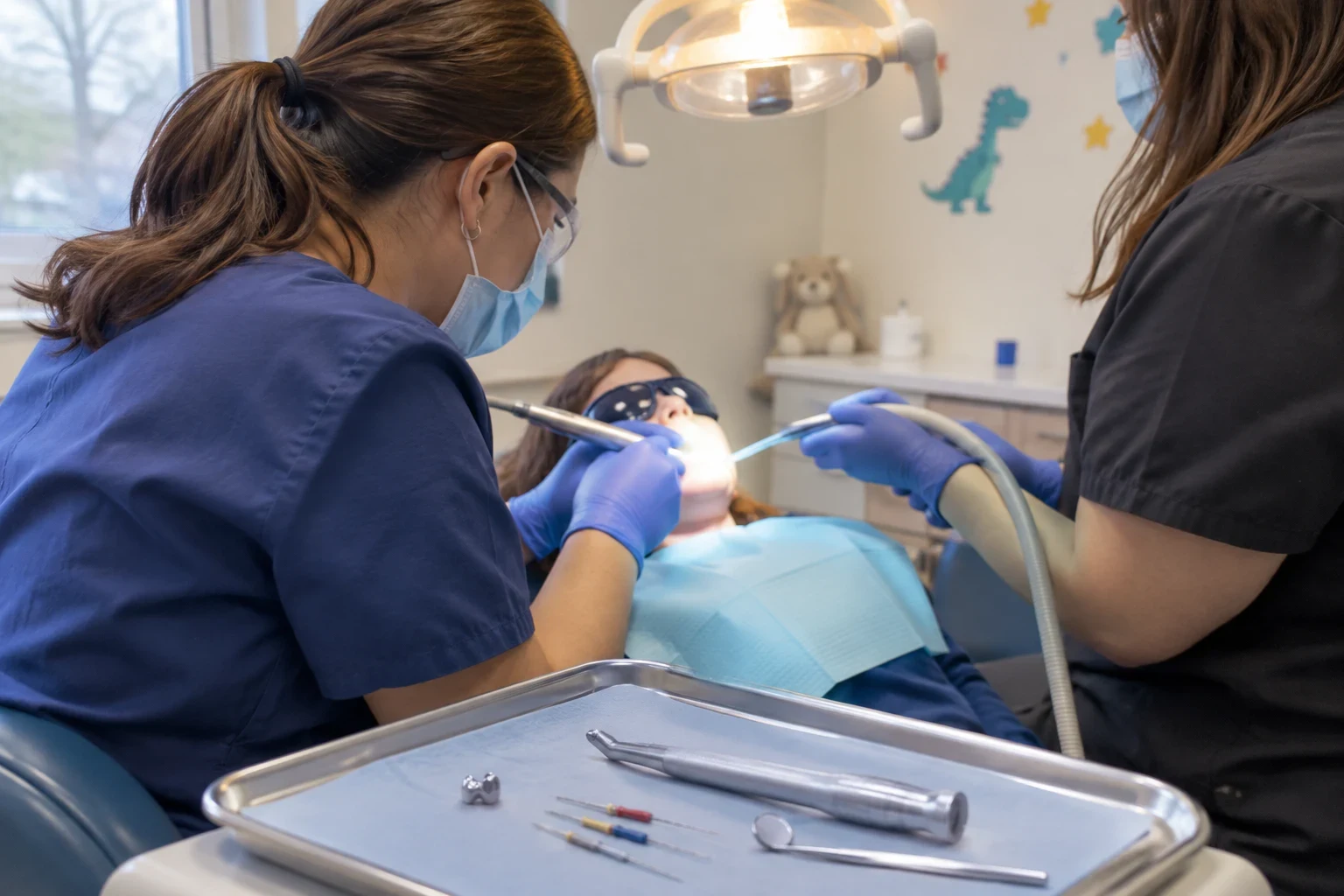
Root Canals
When decay reaches the nerve of a tooth, a pulpotomy or root canal can stop the pain and keep the tooth in place until it is ready to come out on its own.
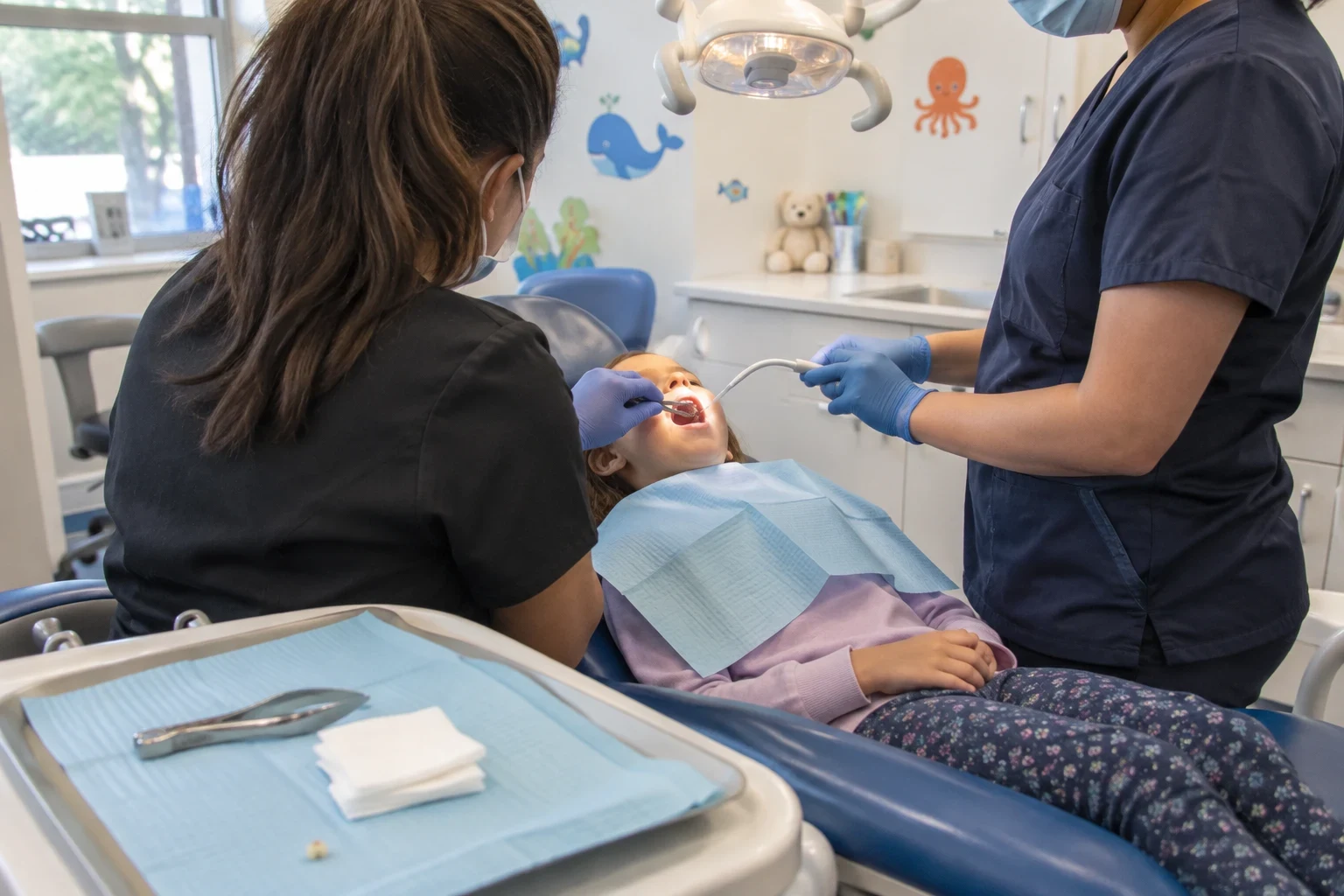
Extractions
When a baby or permanent tooth can't be saved, we remove it gently, explain why first and walk you through healing at home.
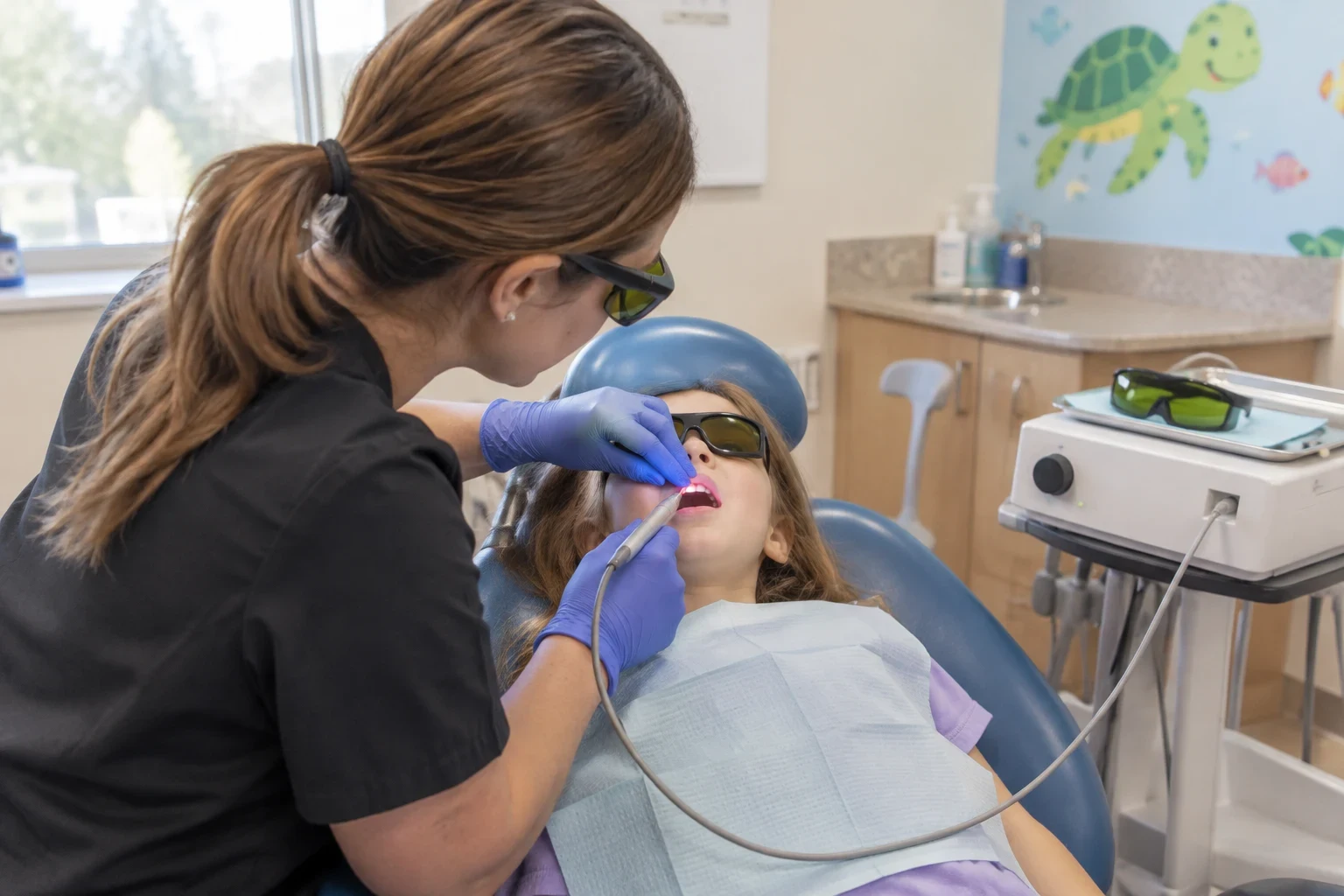
Frenectomies
We check whether a tight tongue or lip tissue is really behind feeding, speech or spacing trouble, then release it gently if it is.
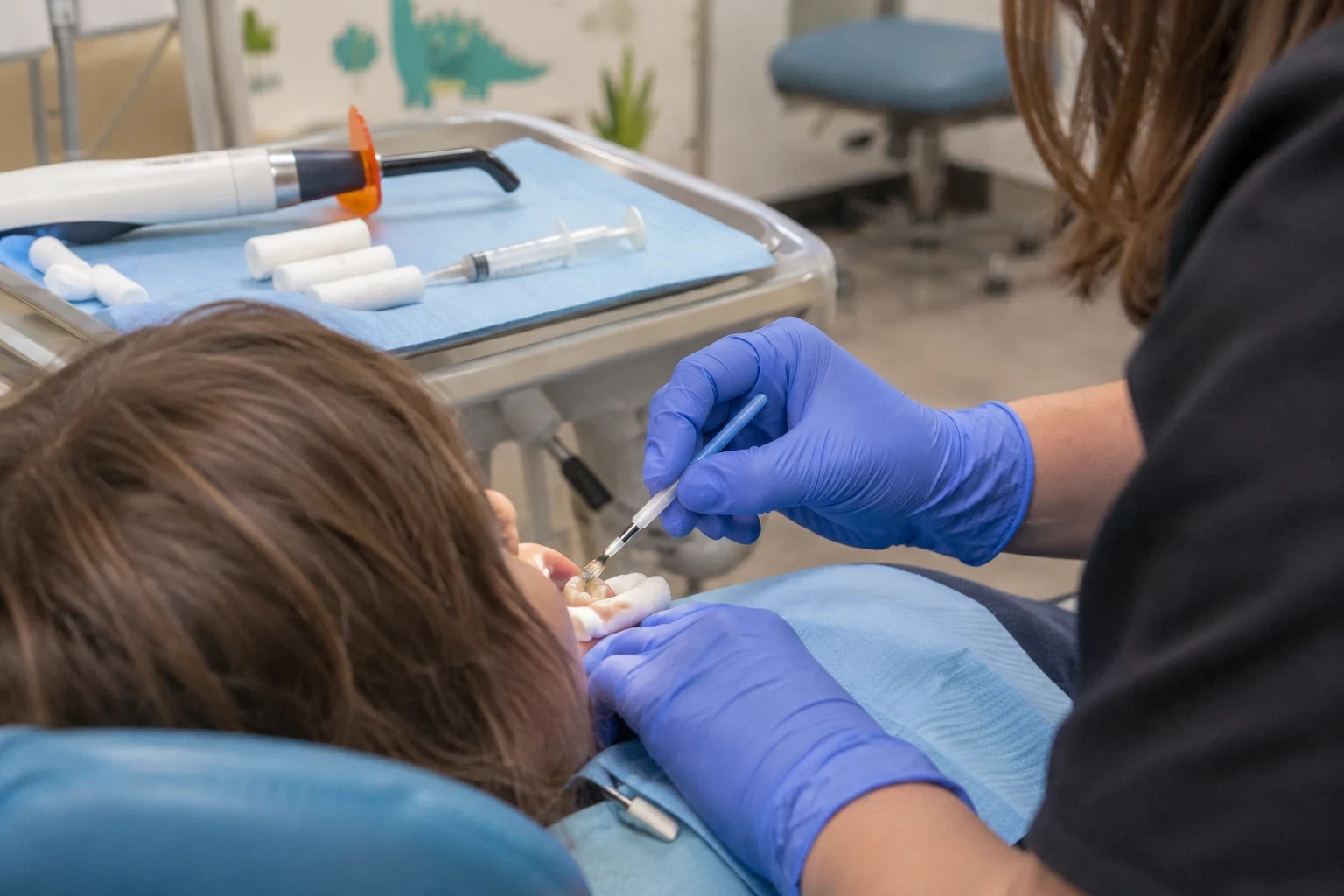
Sealants
A thin protective coating painted into the deep grooves of back teeth, applied in minutes with no numbing and no drilling.
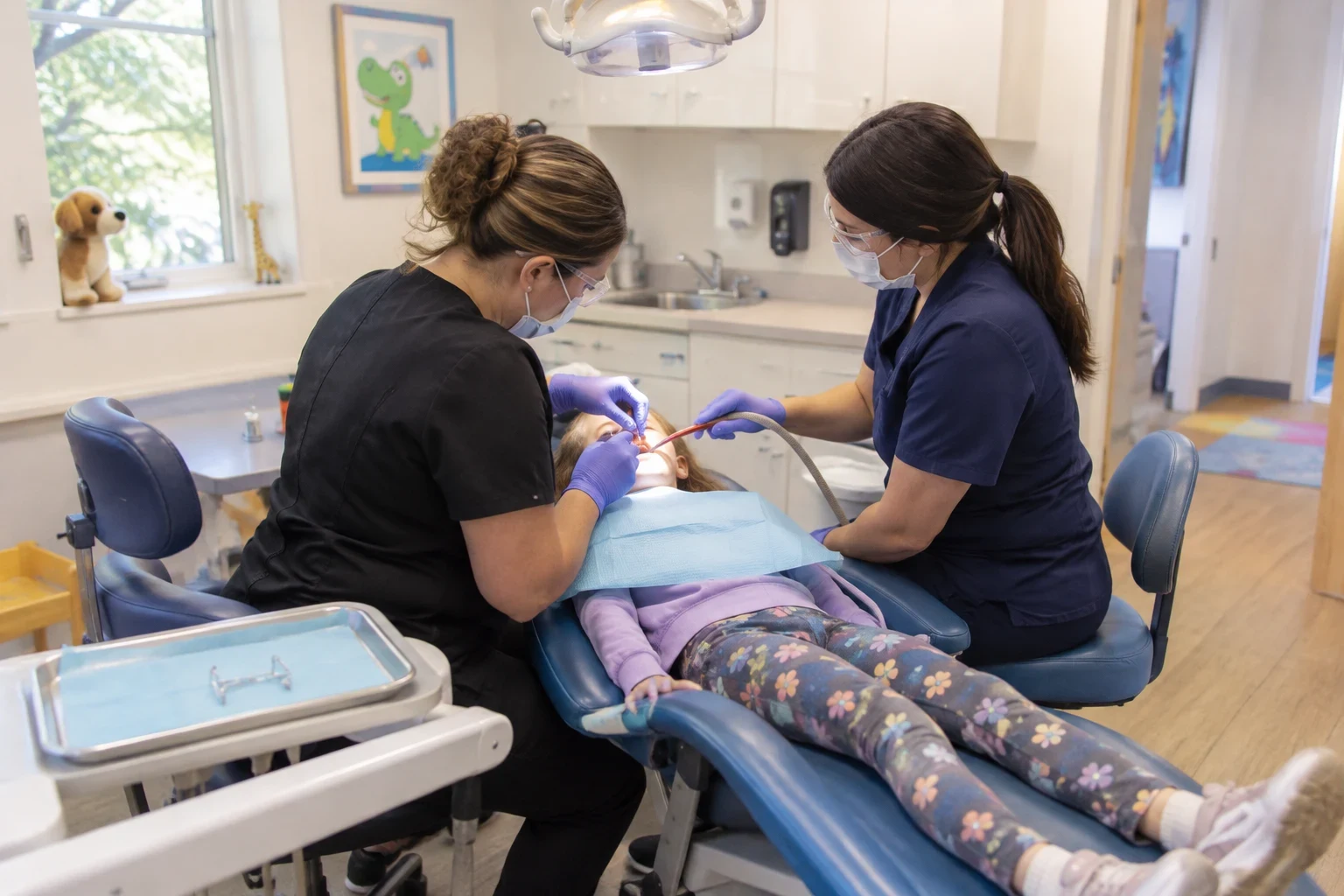
Space Maintainers
When a baby molar comes out too soon, a small appliance keeps nearby teeth from drifting and saves room for the adult tooth underneath.
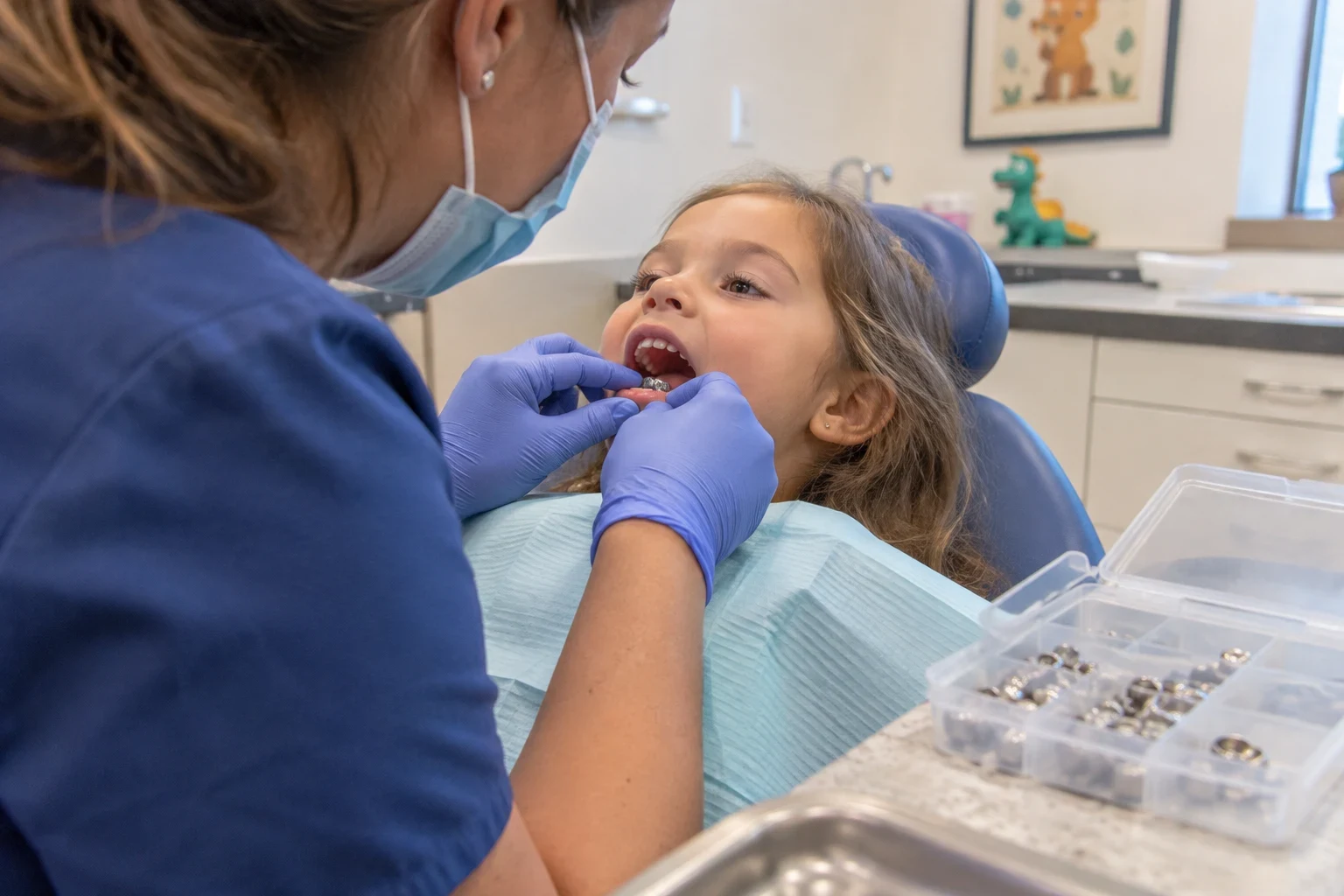
Pediatric Crowns
Crowns that cover a badly decayed or broken baby tooth so it can keep working until the adult tooth is ready to come in.
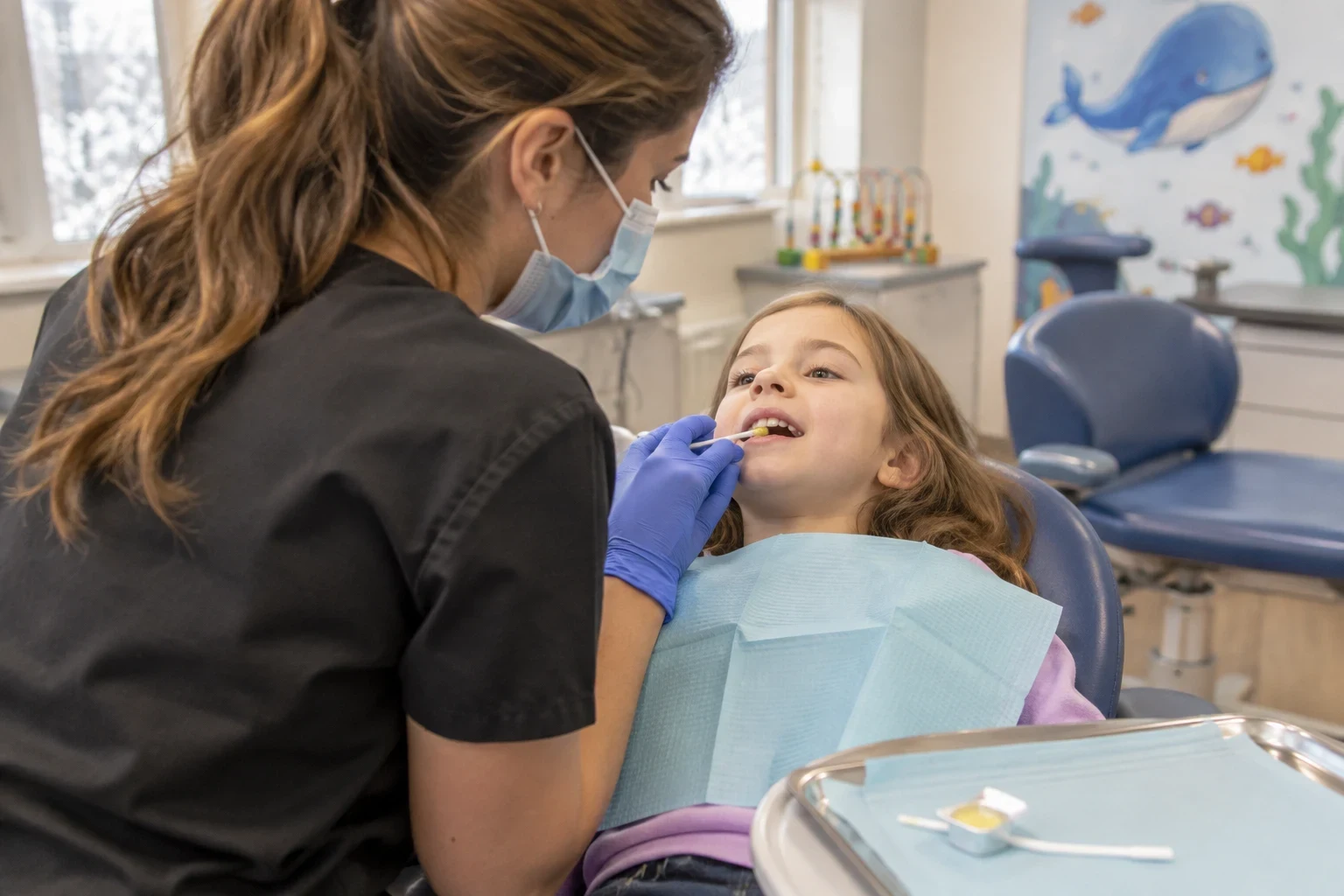
Fluoride Treatment
A quick fluoride varnish painted on after a cleaning to help your child's enamel resist the acids that start cavities.
A Pediatric Office for Bridgewater Families
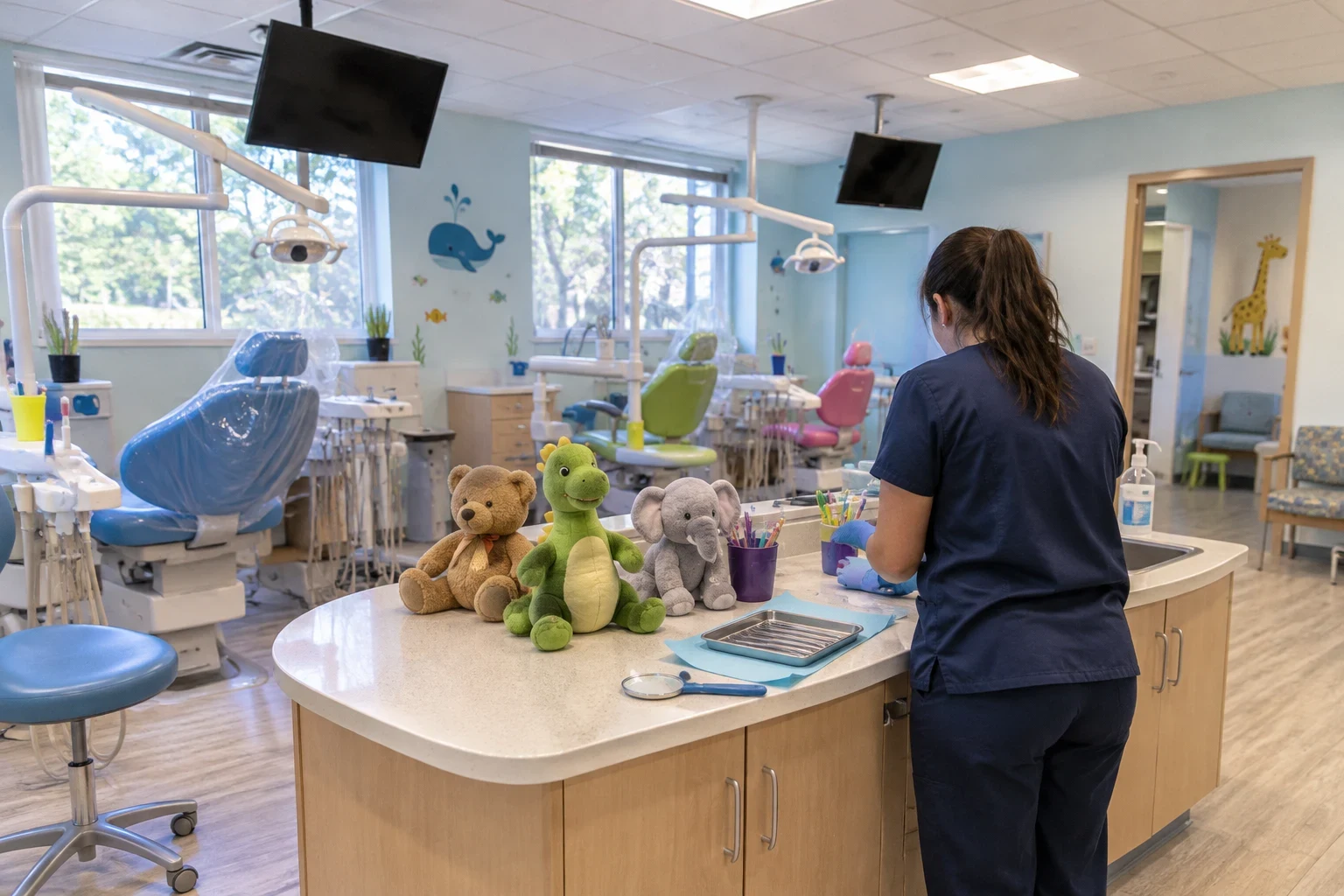
We are a dental office for kids. Everything from how we talk to how long we let a nervous child sit and look around is shaped around children, not adults.
Our approach is simple. We find what is going on, tell you plainly why it happened and walk you through your options. Some parents want every detail; others just want to know what to do next. Either way, you leave knowing where things stand and your child leaves with a smile that feels a little better than when they came in.
- Certifications
- Board-certified pediatric dentists
Why Parents Choose Us
Parents tell us the hardest part of a dental visit is not knowing what is going on. So we tell you, in plain words, every time.
- 01
We explain the cause
If your child has a cavity, we tell you what likely caused it, whether that is a bedtime bottle, frequent snacking or deep grooves in the molars. Knowing the cause is how you stop the next one.
- 02
Options before treatment
When there is more than one reasonable way to treat a tooth, we lay them out side by side. That includes watching a small spot instead of filling it right away, when that is a sound choice.
- 03
Visits paced for kids
We show your child the tools, use words they understand and take breaks when they need them. Nervous kids get time, not pressure.
- 04
Parents stay in the loop
You can stay with your child during the visit, and we talk through what we see while we work. Questions after the visit can be handled by phone or video.
- 05
Care from the first tooth to the teen years
We see babies for their first visit and stay with kids through their teens, so your child gets to know the same office as they grow.
How a Visit Works
Here is the path from your first phone call to walking out the door.
- 1
Register by phone
A short call gets your child on our patient list. We ask how old your child is, about past dental care and which insurance you carry, then pick an appointment time.
- 2
Settle in
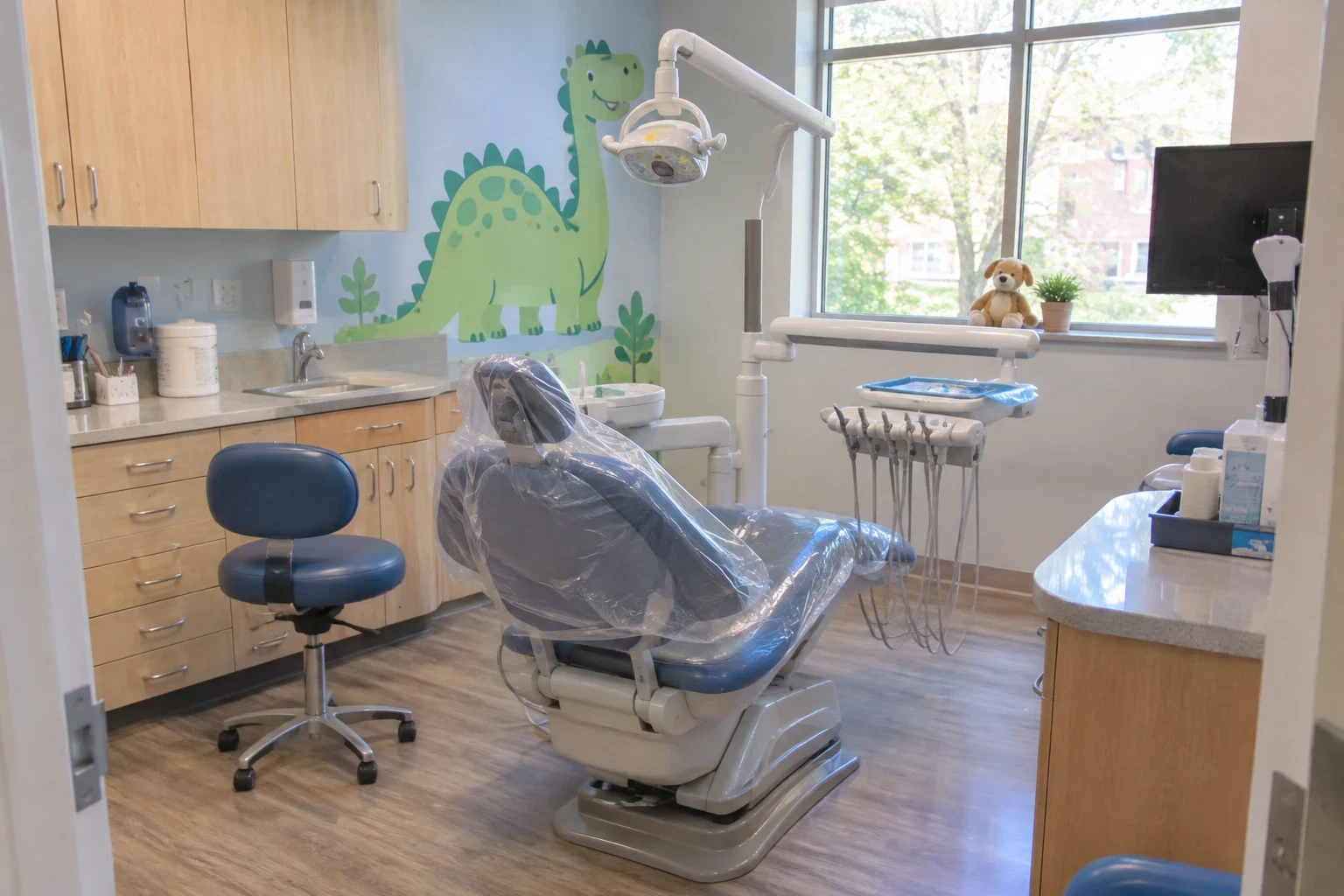
Before anything starts, your child gets a few minutes to look at the chair and the tools. With little ones, the first visit is often brief and mostly about feeling at ease.
- 3
Exam and cleaning
We look at the teeth, gums and bite, then clean gently. X-rays are taken only when your child's age and risk call for them.
- 4
Straight talk with you
Before you head out, you hear what we found, what led to any problems and what the options are. If treatment makes sense, we lay out the steps and what drives the cost so the choice is yours.
- 5
What comes next
We book any follow-up care or the next checkup. Questions that pop up later can often be handled by phone or video.
Families We Serve Near Bridgewater
Our office serves kids and teens from Bridgewater and the surrounding area. Many families come to us from Raynham, East Bridgewater, West Bridgewater and Raynham Center. We also see patients from Brockton, Taunton, Easton, Middleborough, Whitman and Lakeville.
- Bridgewater
- Raynham
- East Bridgewater
- West Bridgewater
- Raynham Center
- Brockton
- Taunton
- Easton
- Middleborough
- Whitman
- Lakeville
Visits take place at our office, and some follow-up questions can be handled by phone or video. Call to register your child and find an appointment time that works.
Questions Parents Ask Us
How old should my child be for a first dental visit?
Book that first checkup by your child's first birthday. If a tooth came in early and has already been there six months, come in sooner. These early visits are short and gentle, and they let us spot early decay while giving you practical tips on brushing and feeding.
We brush every day. Why does my child still get cavities?
Brushing helps, but it does not cancel out everything else. Grazing on snacks, sipping juice or milk all day, a bottle at bedtime and deep grooves in the back molars all push the risk up. We look at which of these fits your child and suggest changes your family can actually keep up with.
Why fill a baby tooth that will fall out anyway?
Because many baby molars stay put until roughly age 10 to 12. Left alone, a cavity can lead to pain and infection and can harm the adult tooth forming below it. If the spot is tiny or the tooth is nearly ready to come out, we will say so and tell you whether keeping an eye on it is a fair choice.
What if my child is afraid of the dentist?
We take it slow, describe each step in words kids understand and let your child hold and look at the tools before we use them. Pausing is always allowed. If your child needs more support than that, we can talk through sedation dentistry with you and whether it fits.
Can I be in the room during the visit?
Yes. Lots of parents stay right there, and little ones tend to relax with a parent nearby. We tell you what we are seeing while we work.
Which payment options do you take?
You can pay with Visa, MasterCard or Discover, and we take most insurance plans as well as the CareCredit Patient Payment Plan. If you are unsure how your plan works with us, bring it up during your registration call.
Do sealants and fluoride really help?
For most kids they do. Sealants close off the deep grooves on back teeth where food and germs collect, and fluoride makes enamel tougher against decay. Each takes only minutes, does not hurt and costs a fraction of what a filling would later.
Let's Get Your Child Registered
One quick phone call adds your child to our patient list and finds a time for that first appointment. Ask us anything along the way, and we will let you know what to have with you on the day.