ServicesRoot Canals
Root Canals for Kids in Bridgewater
A cavity that reaches the nerve does not always mean your child loses the tooth. We show you the X-ray, tell you whether treating the pulp or pulling the tooth is the smarter choice, and explain how the appointment will feel before we begin any work.
What a root canal means for a child
At the center of each tooth is the pulp, a soft core of nerve and blood vessels. Deep decay or a knock to the tooth can leave that core inflamed or infected, which is often when the aching begins. A root canal takes out the damaged pulp, so the pain stops and your child keeps the tooth.
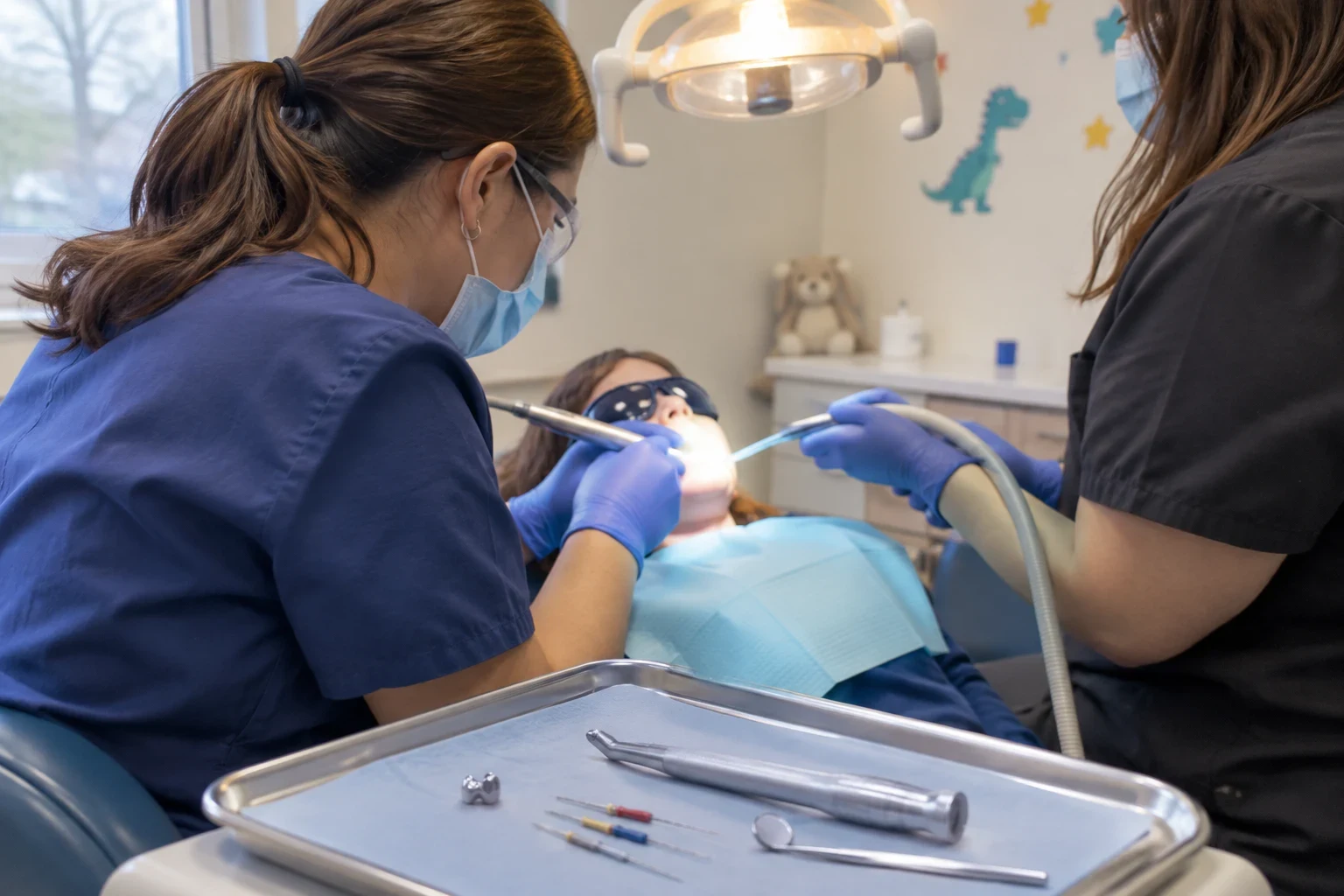
With baby teeth, the usual treatment is a pulpotomy. We remove the infected pulp in the upper part of the tooth and leave the healthy tissue in the roots alone. When infection has spread further down, a pulpectomy cleans the roots too. Older kids and teens with permanent teeth may need a standard root canal, planned around how developed their roots are.
Our board-certified pediatric dentists treat small teeth like these every week. We will tell you honestly when a tooth is worth saving and when it is not.
What your child's treatment covers
- X-rays and a plain diagnosis
- X-rays tell us how far the decay has traveled toward the nerve and whether the roots or surrounding bone are infected. We put the images in front of you and talk through what they show.
- Gentle numbing
- A numbing gel goes on first, so the shot itself is hardly noticed. We explain each step to your child in kid-friendly words and never rush.
- Clearing out the damaged pulp
- A small rubber shield keeps the tooth dry while we remove the decay and the inflamed pulp. In a pulpotomy, a medicated filling then covers and protects the healthy tissue still in the roots.
- A crown for strength
- Back teeth are weaker after treatment, so they usually get a crown. Our Pediatric Crowns page explains the options.
- Written home care
- We send you home with short instructions covering eating, numbness and mild soreness, and when you should phone us.
Signs your child's tooth may need a root canal
An ache that hangs on
A quick zing from ice cream that disappears right away is often a cavity. When the hurt continues long after the treat is gone, the nerve is likely involved.
Waking up in pain
Throbbing that starts by itself, with no chewing or cold drink to set it off, often means the pulp is inflamed.
A small blister by the tooth
A raised spot on the gum next to a tooth can be an infection draining. Have it checked soon, even if your child says nothing hurts.
A front tooth going dark
Bumped front teeth are common with kids. If one turns gray in the weeks after a fall, the nerve inside may be hurt.
A puffy cheek or jaw
Swelling tells us the infection is spreading. Phone us so we can see your child and plan the right next step.
What moves the price of treatment
Two toothaches that feel the same can need very different work, so we can only give you a fair number after we have looked at the X-rays. After the exam, we walk you through the treatment plan one item at a time. You can pay with the CareCredit Patient Payment Plan, use most insurance plans, or pay by MasterCard, Visa or Discover.
How far the treatment reaches
A pulpotomy treats only the pulp near the top of the tooth. When every root has to be cleaned, the work takes longer and has more steps.
Baby tooth or adult tooth
A permanent molar has more canals than a baby molar, and the work may be split over more than one visit.
Whether a crown is needed
A treated back tooth usually needs a crown so it can handle chewing. You will see it as a separate line in the plan.
Help staying calm
If your child needs nitrous oxide or deeper sedation to stay comfortable, that adds to the cost.
Your insurance coverage
Plans treat children's root canals differently. We go through what your plan says with you before any work starts.
How the visit goes
- 1
Phone call and registration
You call, we register your child as a new patient and find an appointment time. Tell us about the pain and any past dental visits so we are ready.
- 2
Exam and a straight answer
We examine the tooth, take X-rays and tell you what we found. If the tooth can be saved we say so; if pulling it is the better choice, we say that too and explain why.
- 3
Treatment in one visit
Most pulpotomies and crowns are done in a single appointment of about an hour. If your child is very anxious or the work is extensive, we may talk about options on our Sedation Dentistry page.
- 4
Recovery and follow-up
Your child can usually go back to school the next day. We check the tooth at regular exams and cleanings to make sure it stays healthy until it falls out naturally.
What parents ask us about root canals
My child's baby tooth will come out someday. Why treat it?
The back baby molars usually stay put until somewhere around age 10 to 12. When one comes out years early, the teeth beside it can drift into the space and crowd out the adult tooth waiting underneath. An untreated infection can also keep hurting and spread. Saving the tooth keeps your child chewing and speaking normally.
Is it painful for kids?
We numb the tooth fully, so most children feel pressure, not pain. Many kids leave feeling better than when they came in, because the source of the ache is gone. Some mild soreness for a day or two is normal, and a children's pain reliever usually handles it.
Would taking the tooth out be better?
Sometimes, yes. If a tooth is badly broken, deeply infected or close to falling out on its own, removing it can be the better call. A back tooth lost early may need a spacer, which our Space Maintainers page covers. We will lay out both choices and tell you why we recommend one.
When can my child eat again?
Wait until the numbness wears off, usually a couple of hours, so your child does not bite a cheek or lip without noticing. Stick to soft foods that evening. Most kids are back to their usual meals the next day.
How can we prevent another one?
Regular checkups catch cavities while a small filling can still handle them. Sealants cover the deep grooves on back teeth, and fluoride treatment helps harden enamel in the spots where decay usually starts.
A sore tooth deserves a clear answer
Tell us what your child is feeling and we will find out why, then lay out the choices in everyday words. We see kids from Bridgewater and towns close by, such as Raynham and East Bridgewater.