ServicesFillings
Kids' Fillings in Bridgewater
Small cavities are easiest to treat when they're found early. We numb the tooth gently, remove the decay and rebuild it with a filling that matches your child's tooth color. You'll also hear, in plain words, why the cavity formed and how to stop another one.
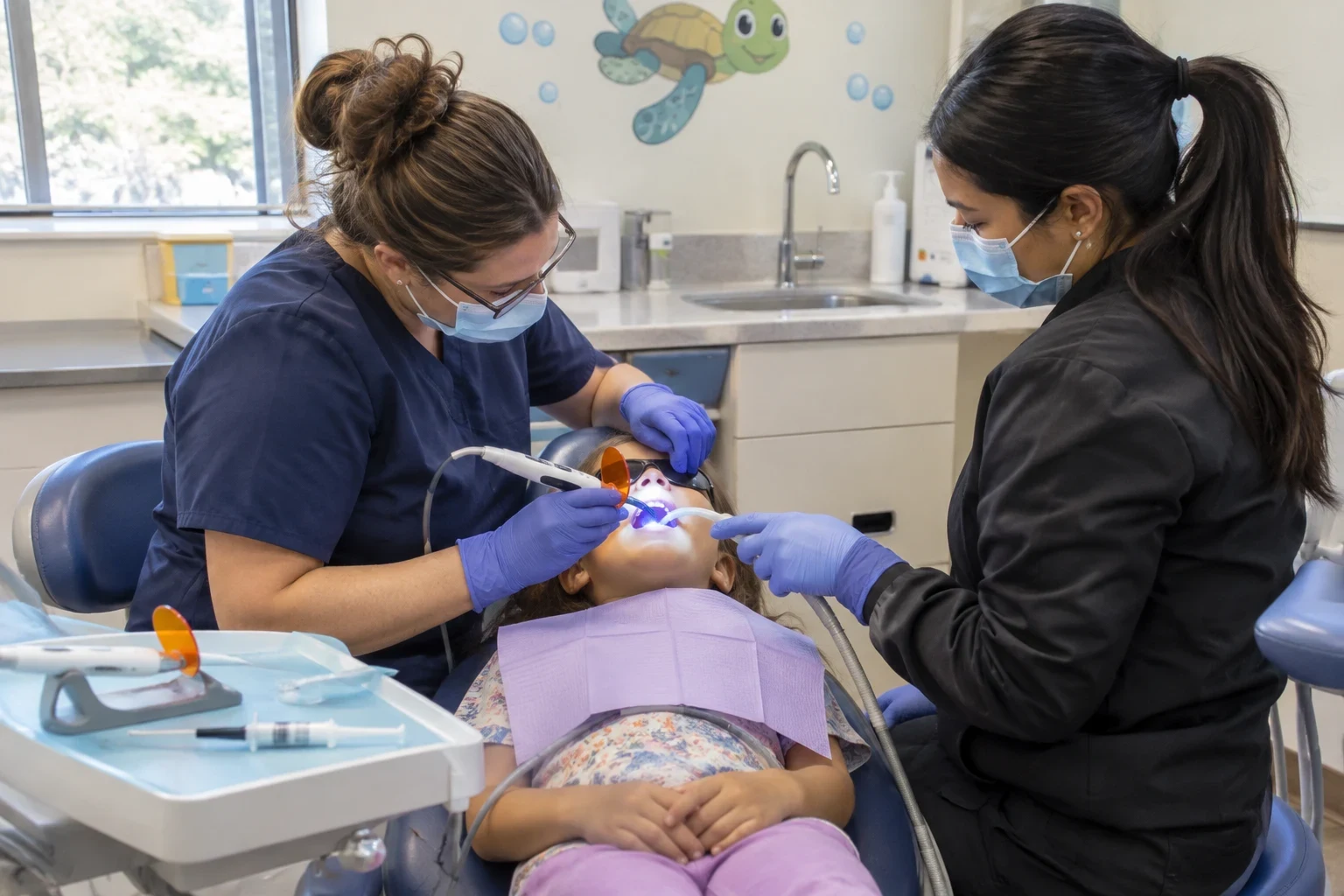
What a filling does and when it's the right choice
A cavity is a spot where decay has broken through the enamel. Teeth can't repair that damage on their own. Over time the hole deepens toward the nerve, and what could have been a small filling may become a crown or a root canal. A filling stops that slide. We take out the softened, decayed area and rebuild the tooth so your child can chew without discomfort.
Many parents wonder whether a baby tooth needs a filling when it will come out eventually. Usually the answer is yes. The back baby molars often stay until a child is 10 to 12 years old, saving room for the permanent teeth underneath and helping with chewing and speech. Our board-certified pediatric dentists give you a straight answer on when a filling is worth it, and when a tiny spot can be monitored or a loose tooth left to fall out.
What your child's filling visit includes
A look at the cause
We note where the cavity formed and explain what likely led to it. Frequent snacking, deep grooves and plaque left between teeth are the usual suspects.
Gentle numbing
A numbing gel goes on before the injection so your child barely feels it. Each step is explained in kid-friendly language first.
Tooth-colored material
Most of our fillings are composite resin shaded to blend with the tooth. For some baby teeth, glass ionomer works better because it slowly releases a bit of fluoride.
Bite check and smoothing
Your child bites down on thin paper so we can confirm the filling isn't too high. Then we polish the edges so nothing snags food or bothers the tongue.
Clear aftercare notes
Before you leave, we cover when eating is fine and what to keep an eye on. We also share simple habits that help protect the rest of your child's teeth.
When a cavity may be the reason
- Flinching at cold or sugary treats
- If your child winces at ice cream or a sip of juice, decay may have worn through the enamel.
- White, brown or gray spots
- Chalky white patches signal early decay. Brown or gray areas, often on back molars, usually mean a cavity is already there.
- Food getting stuck in one spot
- Repeated complaints about food trapped in the same place can point to a hole between two molars that's hidden from view.
- Chewing on one side
- Children often can't explain tooth pain. Avoiding one side of the mouth or refusing certain foods may be the only hint.
- Spotted at a checkup
- Plenty of cavities don't hurt at all. X-rays taken during routine exams and cleanings find them while they're still small.
How the appointment goes
- 1
Settling in
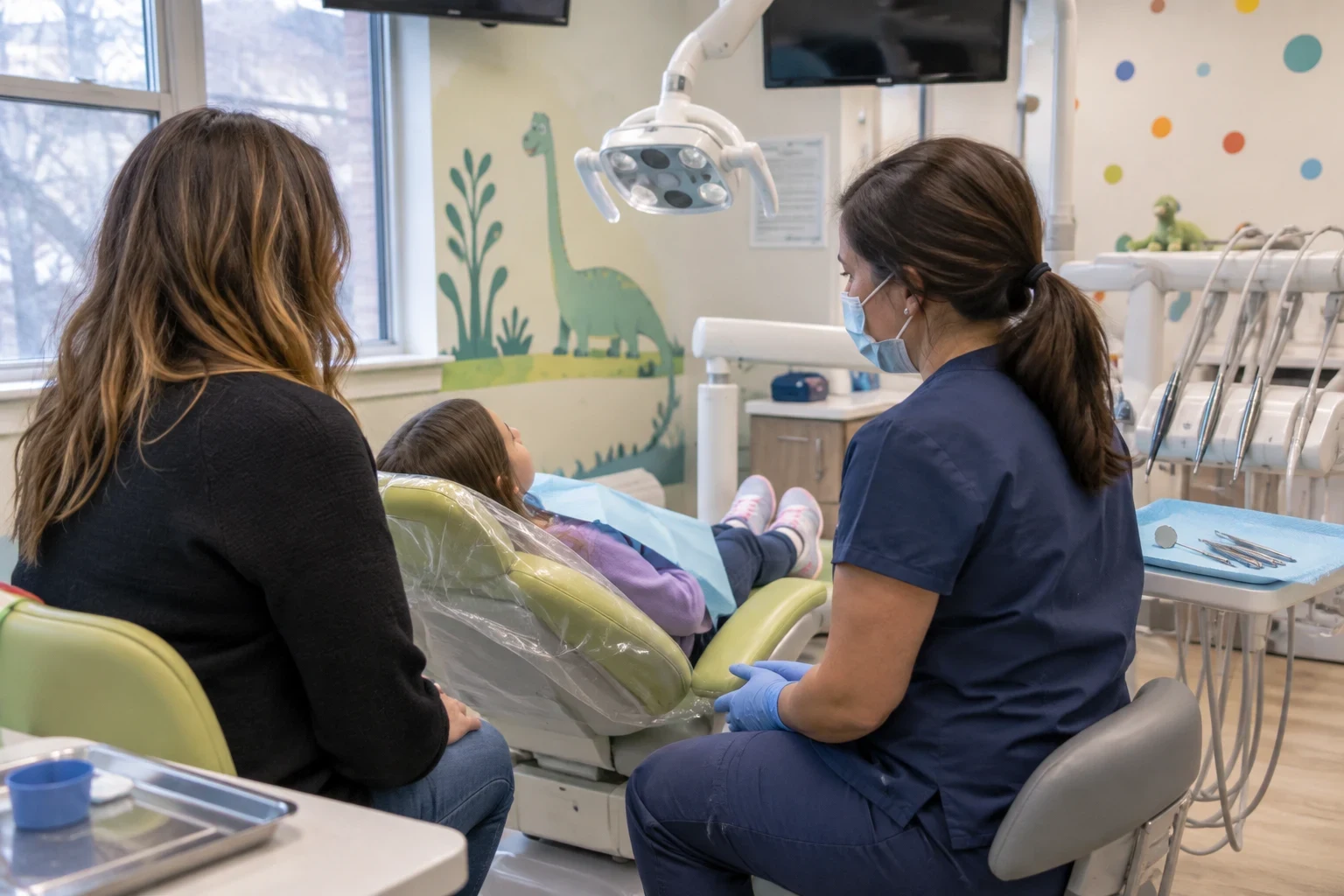
Kids are welcome to bring a favorite toy. Before we start, your child gets to see and touch the tools so nothing about the visit comes as a surprise.
- 2
Numbing the tooth
We start with a topical gel, then give a slow, gentle injection. For a child who is especially anxious, or who has more than one cavity to treat, sedation dentistry is an option we can talk through with you ahead of time.
- 3
Cleaning out the decay
We remove only the damaged part and keep as much healthy tooth as we can. A small rubber dam or cotton rolls keep the area dry while we work.
- 4
Placing and shaping the filling
The material goes in thin layers, each hardened with a blue curing light. Then we shape it to fit your child's bite. One filling usually takes well under an hour.
- 5
Heading home
Lips and cheek typically stay numb for two to three hours. Offer soft foods until feeling comes back, and watch that your child doesn't chew on a lip or cheek.
What moves the price of a filling
We go over the cost with you before any work starts, so the bill doesn't surprise you. Most of the price depends on how large the cavity is and how many teeth need treatment. Our office takes MasterCard, Visa and Discover, works with most insurance plans and offers the CareCredit Patient Payment Plan.
- Surfaces involved
- Decay on one face of a tooth is a smaller job than decay that wraps across two or three sides, and it costs less.
- Number of cavities
- Some kids need one filling, others need several. We can finish them in one visit or split them up, depending on what your child handles best.
- Filling material
- Composite resin and glass ionomer have different fees. Insurance plans don't always cover them the same way, either.
- Sedation, if used
- If your child needs sedation to get through treatment comfortably, that is billed separately. We talk it over with you before the appointment.
- Your coverage
- Plans vary in how much they pay toward fillings. We help you see what yours will likely cover before we begin.
Questions parents ask about fillings
- Is getting a filling painful?
- After the tooth is numb, kids usually feel some pressure and buzzing rather than pain. Most children worry about the shot more than anything else, so we apply a numbing gel first and go slowly. The gum near the tooth may be a little sore for a day.
- Why did my child get a cavity when we brush every day?
- A toothbrush can't clean between teeth or deep into the grooves of back molars. Snacking through the day or sipping juice and milk for hours also keeps acid on the enamel. We'll tell you the most likely cause for your child and the small change that would help most.
- When is a crown better than a filling?
- A large cavity, or a tooth that has had nerve treatment, may be too weak to hold a filling for long. Pediatric crowns cover the whole tooth and protect it until it falls out. We'll show you the X-ray so you can see why we recommend one over the other.
- How long do fillings last in baby teeth?
- A well-placed filling usually stays in until the baby tooth comes out naturally. New decay can still start around the edges, so regular checkups matter. Sealants and fluoride treatment help protect the teeth that don't have cavities yet.
- When can my child eat again?
- Wait until the numbness wears off, usually two to three hours. Until then, stick to drinks and very soft foods so your child doesn't bite a cheek or the tongue by accident.
Let's fix that cavity while it's small
Treating decay early keeps the visit short and spares your child a larger repair down the road. Families come to us from Bridgewater and towns nearby, including Raynham and East Bridgewater.